

History & Movement

Historical Context

The Santhal Hul emerged from deep social and economic unrest caused by colonial expansion and exploitative systems. British policies disrupted tribal autonomy, land ownership, and traditional governance, pushing the Santhal community toward organized resistance.

Colonial Interference in Tribal Lands

British administrative expansion introduced new laws and revenue systems that undermined traditional Santhal authority. Forest control policies restricted access to land and natural resources.

Economic Oppression and Debt

Moneylenders (Mahajans) and zamindars imposed heavy debts and unfair taxation on tribal communities. This system trapped many Santhals in cycles of exploitation and loss of land.

Growing Resistance Among Santhals

As injustice increased, anger and frustration spread across Santhal villages. This growing unrest eventually united thousands in the historic Santhal Hul of 1855–56.
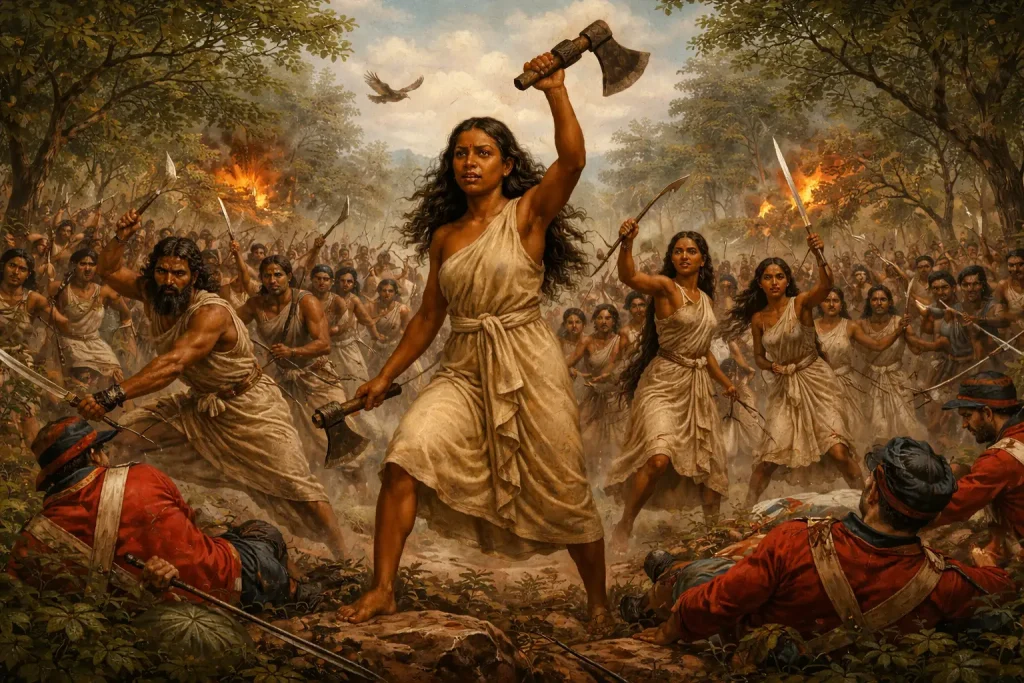
The Santhal Hul

Leadership, courage, and community-driven resistance

A People’s Revolt

The Santhal Hul (1855–56) became one of the largest tribal uprisings against British rule. Thousands of Santhals united to challenge colonial oppression and reclaim control over their land and dignity.

Structured Tribal Mobilizationt

Under strong leadership, tribal communities organized themselves into coordinated groups. Villages communicated through traditional networks, strengthening unity and collective resistance.

Movement Contributor

Women on the Frontlines

Santhal women actively joined the struggle, not only supporting but also fighting alongside male warriors. Their courage broke social barriers and strengthened the movement’s resolve.

Collective Strength and Determination

The uprising was not led by individuals alone—it was driven by shared identity and purpose. Every member of the community played a role in defending their homeland and cultural survival.

Guerrilla Warfare & Mobilization

Impact, memory, and long-term significance

Guerrilla Warfare in the Forests

Santhal warriors used dense forests and hilly terrain to their advantage. Familiarity with the landscape allowed them to launch sudden attacks and retreat swiftly, making it difficult for British forces to track them.

Signals of Unity

Drums were used to send coded messages across villages, alerting communities about danger or mobilization. These rhythmic signals became a lifeline of coordination during the uprising.

Armed with Indigenous Strength

The fighters relied on traditional weapons such as axes, bows, arrows, and spears. Though lacking modern firearms, their skill, courage, and unity made these weapons powerful tools of resistance.

Rapid Tribal Communication

Trusted messengers moved swiftly between villages, carrying strategic information. This traditional communication network ensured coordination and strengthened collective action.

Scroll to Top